It’s high time for the Single Market to benefit all

Should you encounter issues watching the video, click here.
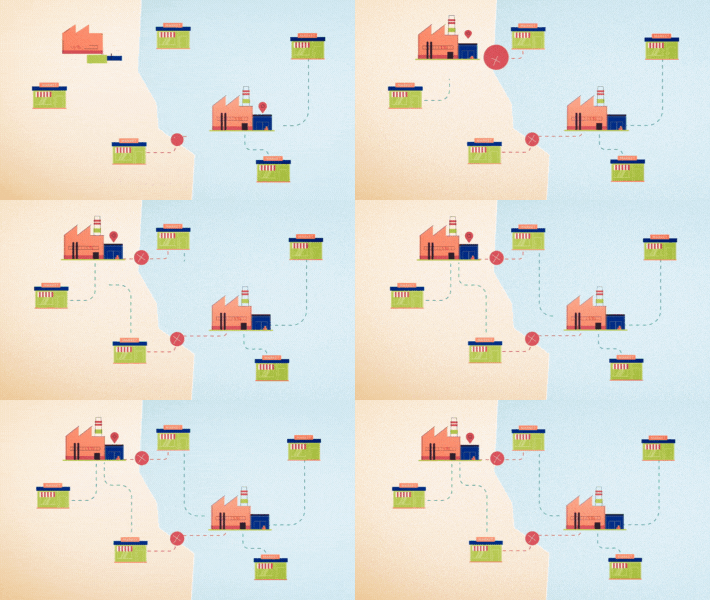
Large consumer goods manufacturers are preventing retailers and wholesalers from sourcing products where they wish in the Single Market. Their use of restrictions known as Territorial Supply Constraints (TSCs), stop retailers being able to get the best deal for consumers that could help bring down prices.
At a time when consumers need to make savings, the cost of this behaviour is more than €14 billion. After 30 years of the EU Single Market and as many consumers struggle to cope with the cost-of-living crisis, it is high time for the European Commission to act to help retailers achieve better deals for consumers and create a #SingleMarket4All.
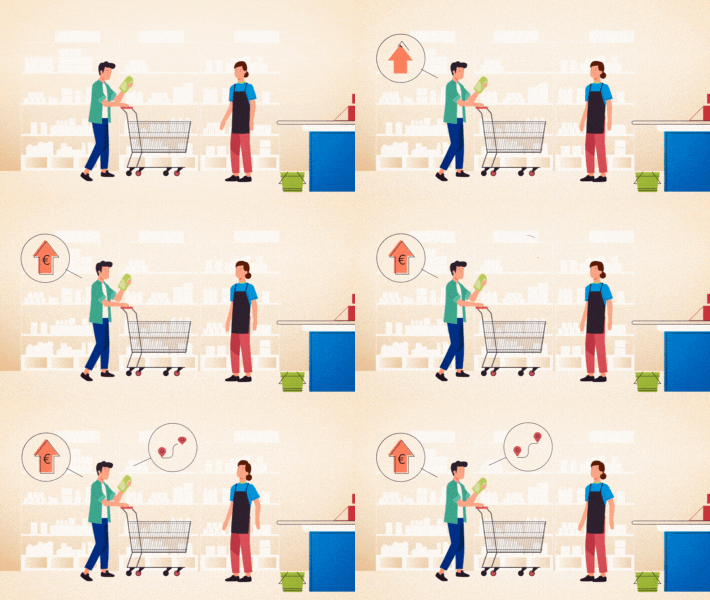

Large consumer goods manufacturers are denying retailers the advantages offered by the Single Market.
These Territorial Supply Constraints (TSCs) stop retailers having the freedom to source where they want to in the Single Market.
This means some EU consumers are paying more for the same everyday products such as detergents, cosmetics, sweets and beverages compared to those in a neighbouring country or simply cannot find certain products in their shop.
Studies estimate that this is costing consumers €14 billion.
In its Single Market Strategy published in May 2025, the European Commission promised to tackle TSCs – to ensure consumers can truly benefit from the EU Single Market.
EuroCommerce calls on the Commission to propose legislation to prohibit manufacturers from using TSCs before the end of 2026.

Media
Studies
Press releases, positions and policy talks by EuroCommerce
National actions
EU actions