
Protein Diversification in Retail and Wholesale
An informative report for grocery retailers and wholesalers, and their stakeholders
An informative report for grocery retailers and wholesalers, and their stakeholders
Protein diversification is gaining attention as a response to key challenges in the European food system, including climate change, environmental pressures, and import dependencies for protein crops and oilseeds.
For the retail and wholesale sector, it offers potential to improve sustainability and strengthen supply chain resilience, although both demand- and supply-side challenges remain.
Protein diversification is about making use of all protein sources, including animal-based products. The livestock sector remains an essential part of the food system, particularly for balanced diets and in regions less suited to arable farming.
This report focuses on alternative proteins, which are still developing and require further support to reach their potential within a balanced food system combining all protein sources and technologies.
It was developed as part of the School for Moral Ambition Fellowship, based on a voluntary survey, interviews, and feedback from retailers, wholesalers, and national associations. It reflects a range of perspectives without attributing individual views unless stated.
The report aims to share insights and highlight current actions across the sector, while recognising varying levels of engagement and priorities.
It is not a scientific study or a sector position, but a structured overview of current developments supported by research and stakeholder input.
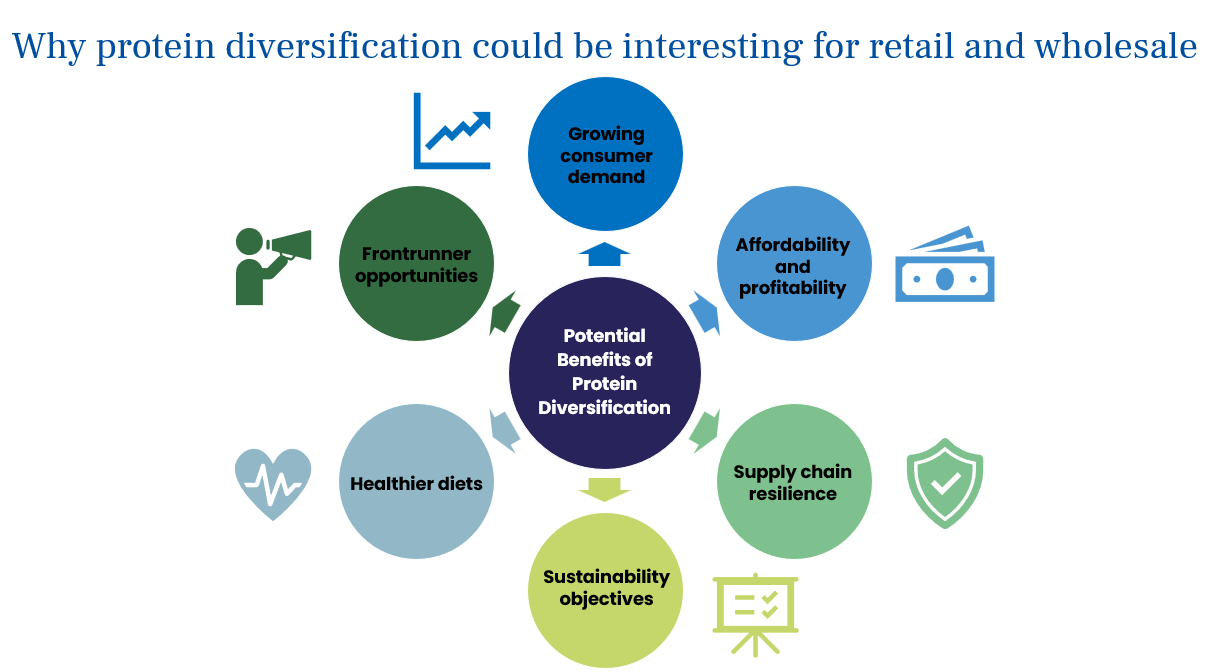
Protein diversification offers a wide range of opportunities for the European retail and wholesale sector, linking sustainability, health, and economic performance with key industry priorities.
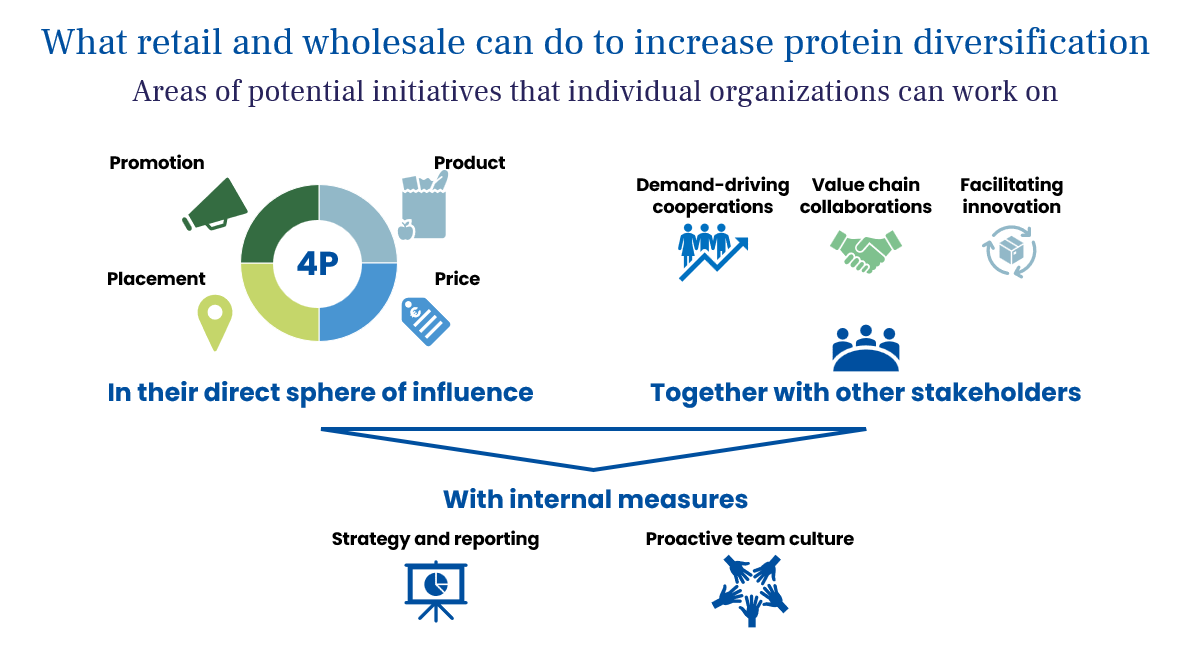
Retailers and wholesalers that are interested to increase protein diversification, work on a wide range of measures within their direct sphere of influence, together with other stakeholders, and with internal measures.

Clément Tischer, Head of FoodTech at REWE Group, explains the potential of investing in alternative protein technologies.

Martijn Versteegh, Program Director Sustainability at Albert Heijn, explains their private-label assortment strategies to increase protein diversification.

Dr. Julia Adou, Director National Sustainability at ALDI SÜD Deutschland, presents the #Ernährungswechsel as part of the national sustainability strategy.


Carlos Santos, Quality & Private Brand Development Global Director at Jerónimo Martins, explains how they inspire customers to try a more diverse and healthier diet across their retail brands.

Verena Wiederkehr, Head of Plant-Based Business Development at Billa, speaks about their current plant-based reformulation project and the advantage of a dedicated role to align and drive all initiatives within their plant-based strategy.


Maja Effersøe Khan, political adviser at Forbrugerrådet Tænk, speaks about the Danish “Bønne Burrito” campaign, a cross-industry collaboration together with major grocery retailers.


David van Dooijeweert, CSR Advisor at JUMBO Supermarkten, explains their use of the Protein Tracker and how it helps them make progress to reduce emissions and offer more sustainable protein products.


Minna Vakkilainen, Senior Vice President Marketing, Data and Digital services at Kesko, introduces some sustainability and nutrition features of the K-Ruoka app.